
Chartered Engineer Certificate for Used Machinery Import: Complete Document Checklist

Importing used or second-hand machinery into India can be commercially attractive, especially for manufacturers looking to reduce project cost, expand capacity or acquire specialised equipment that may not be easily available domestically.
But used machinery import also requires more careful documentation than new machinery import.
One important document often required in such cases is a Chartered Engineer Certificate for used machinery import. This certificate helps support technical identification, condition review, age-related information, valuation-related observations, residual life comments where applicable, and other import-linked documentation requirements.
For importers, the biggest practical challenge is usually not understanding the certificate itself. It is knowing what documents and technical details must be kept ready before approaching a Chartered Engineer.
This blog gives you a complete document checklist for used machinery import certification in India.
Why Is a Chartered Engineer Certificate Needed for Used Machinery Import?
Used machinery is different from new machinery because its technical identity, condition, age, previous use, refurbishment status and market value may need independent engineering review.
Indian customs valuation instructions have historically recognised the role of an independent Chartered Engineer certificate for second-hand machinery. The Directorate General of Valuation’s circular on valuation of second-hand machinery notes that importers of second-hand machinery are required to produce a certificate from a professional independent Chartered Engineer or equivalent institute in the country of supply. The certificate may indicate information such as CIF value if purchased now, year of manufacture, sale price, present condition and repairs or reconditioning, if any.
CBIC’s Circular No. 07/2020-Customs also explains that inspection/appraisement reports for second-hand machinery may be issued by Chartered Engineers or equivalent professionals based in the country of sale, and where an overseas report is not produced, the importer may engage a Chartered Engineer empanelled by the Custom House at the port of import.
This makes documentation quality extremely important.
A weak or incomplete document set can create delays, queries, additional explanations or valuation-related complications.

What Does a Used Machinery Import Certificate Usually Cover?
A Chartered Engineer Certificate for used machinery import may cover technical and documentation points such as:
machinery description
manufacturer details
country of origin or country of inspection
year of manufacture
serial number or identification number
present condition of machinery
expected lifespan or residual life comments
invoice value and related commercial details
original sale price or estimated original value, where needed
repairs, reconditioning or refurbishment details
dismantling, packing or transport-related cost details
technical references used for inspection
photographs and supporting records
CBIC’s prescribed Form A and Form B for second-hand machinery inspection/appraisement reports include fields such as manufacturer name, year of manufacture, serial number, machine description, invoice details, present condition, expected lifespan, repair or refurbishment details, and close-up photographs.
So, before contacting a Chartered Engineer, the importer should prepare a complete document file.
Complete Document Checklist for Used Machinery Import Certificate
1. Importer Details
The first set of documents should establish who is importing the machinery.
Keep ready:
importer company name
registered office address
factory or installation location
contact person details
GST details, if relevant
IEC number
email and phone number
nature of business
intended use of machinery in India
The Importer Exporter Code number is specifically included in CBIC’s inspection/appraisement report formats for used machinery.
Practical tip
Make sure the importer name is consistent across invoice, packing list, bill of lading, IEC, purchase documents and any certificate requirement.
2. Supplier / Seller Details
The Chartered Engineer may also need details of the overseas seller or supplier.
Keep ready:
seller name
seller address
country of sale
seller contact details
seller status: actual user, dealer, trader or machinery reseller
proforma invoice or commercial invoice
purchase agreement, if available
CBIC’s Form A for overseas inspection includes seller details such as name, address, telephone number, email and status as actual user or dealer.
Practical tip
If the supplier is a machinery dealer and not the original user, try to collect whatever previous ownership or operating history is available.
3. Commercial Invoice and Purchase Documents
The invoice is one of the most important documents for any used machinery import.
Keep ready:
proforma invoice
final commercial invoice
purchase order
sale agreement, if available
payment terms
currency of transaction
machine-wise value breakup
accessories or spares value breakup
freight, insurance and other cost details, where available
For used machinery, customs may examine whether the declared value is reasonable when compared with the Chartered Engineer report and depreciated value of goods. CBIC’s 2020 circular states that declared value may be examined with respect to the report of the Chartered Engineer and depreciated value determined under earlier valuation circulars.
Practical tip
Avoid clubbing many different machines under one vague invoice description. Machine-wise details help reduce ambiguity.
4. Machinery Description
A clear machine description is essential.
Keep ready:
machine name
type of machine
function of machine
process or production use
capacity or rating
installed power
input and output details
major components
accessories included
control system details, where relevant
whether the import is a single machine, machine line or plant system
CBIC’s report formats require a description of the machine and details of the manufacturer.
Practical tip
Do not use only generic terms like “used machine” or “industrial equipment.” Write a technically meaningful description.
Example:
Better than: “Used production machine”
Use: “Used automatic textile dyeing machine with control panel, pump assembly, stainless steel vessel and auxiliary fittings.”
5. Manufacturer, Make, Model and Serial Number
This is one of the most important parts of the certificate.
Keep ready:
name of manufacturer
manufacturer address or country, if available
make
model number
serial number
machine ID number
nameplate details
equipment tag number
manufacturer website or brochure, if available
CBIC’s formats specifically ask for the manufacturer of the machine, year of manufacture and serial number or ID number. They also ask that a photograph be enclosed where the manufacturer’s plate is affixed.
Practical tip
Take close-up photographs of the machine nameplate. Blurred nameplate photos are one of the most common reasons for avoidable document follow-up.
6. Year of Manufacture
The year of manufacture is critical for used machinery import certification.
Keep ready:
year of manufacture
supporting manufacturer plate photo
manufacturer certificate, if available
original purchase invoice, if available
service records, if available
seller declaration, if no direct evidence is available
The year of manufacture is a specific field in CBIC’s Form A and Form B inspection/appraisement formats.
Practical tip
If the exact year is not available, clearly disclose the limitation and provide the best available supporting evidence. Do not guess.
7. Machinery Photographs
Photographs are not cosmetic. They are part of technical verification.
Keep ready:
front view of machine
side view
rear view
control panel photo
nameplate photo
serial number / ID plate photo
major component photos
accessories and spares photos
signs of wear, repair or refurbishment
packaging condition, if already packed
close-up photographs of critical identifying details
CBIC’s report format specifically asks for close-up photographs of machinery and notes that multiple photographs may be taken where necessary.
Practical tip
Use good lighting and avoid sending WhatsApp-compressed blurry images when the certificate depends on machinery identity.
8. Technical Specifications and Brochures
Technical specifications help the Chartered Engineer understand the machine properly.
Keep ready:
machine brochure
catalogue
technical datasheet
operating manual
electrical rating
capacity details
dimensions
weight
material of construction
automation or control features
utility requirements
process flow details, if part of a line
drawings, if available
CBIC’s Form A and Form B ask whether catalogues or documentation of the machine are available and require details and copies if available.
Practical tip
Even if the original brochure is unavailable, prepare a technical note describing the machine’s function, capacity and intended industrial use.
9. Original Invoice or Original Sale Price
Where available, original purchase documents help establish the machine’s value when new.
Keep ready:
original invoice of machine, if available
original sale price
original currency
original date of invoice
manufacturer quotation, if available
comparable new machine quotation, if original invoice is unavailable
CBIC’s format asks whether the original invoice of the machine is available and, if not, asks for an estimated original sale price.
Practical tip
If the original invoice is not available, collect a realistic basis for estimated original value. A vague estimate without support may weaken the file.
10. Present Condition of Machinery
The certificate may need to comment on the present condition of the machinery.
Keep ready:
working condition
running video, if available
maintenance records
service history
inspection note from supplier
operational status
known defects
missing parts, if any
dismantled condition, if already dismantled
refurbishment or repair history
The DG Valuation circular notes that the Chartered Engineer certificate may indicate the present condition of machinery and the nature of reconditioning or repairs carried out.
Practical tip
Do not hide repair or missing-part information. It is better to document it clearly than to create inconsistency later.
11. Residual Life or Expected Lifespan Details
For used machinery, residual life or expected lifespan may become relevant.
Keep ready:
age of machinery
present condition details
service history
maintenance records
hours of operation, if available
refurbishment details
expected remaining useful life basis
technical support documents from seller or manufacturer
CBIC’s forms include “present condition of machinery and expected lifespan.” In the case of second-hand spares of capital goods, the format also refers to certification of whether such spares have at least 80% residual life of the original spare.
Practical tip
Residual life should not be treated casually. It should be based on machinery condition, age, operating history and available technical evidence.
12. Repair, Reconditioning or Refurbishment Details
If the machinery has been repaired, refurbished, reconditioned, modernized or upgraded before export, these details matter.
Keep ready:
whether repairs were done
nature of repairs
refurbishment invoices
who paid for refurbishment
date of repair or refurbishment
replaced parts list
modernization details
cost of refurbishment
before-after photos, if available
CBIC’s 2020 circular specifically notes that if second-hand machinery is reconditioned, refurbished, modernized or improved before import into India, those costs may be relevant for valuation. The prescribed forms also ask whether repairs or refurbishment were carried out and whether invoices exist for the cost.
Practical tip
If refurbishment cost is included in the sale price, mention it clearly. If it is separate, keep separate invoices ready.
13. Dismantling, Packing and Transport Cost Details
Used machinery is often dismantled, crated and packed before shipment.
Keep ready:
dismantling cost
packing cost
crating cost
inland transport cost to port of export
loading charges
separate invoices, if any
whether these costs are borne by seller or buyer
CBIC’s Form A and Form B include fields for charges incurred or to be incurred for dismantling, packing and transporting the machinery to the port of export.
Practical tip
If these charges are not included in the invoice, keep separate records ready.
14. Packing List
The packing list helps match the invoice, shipment and machinery details.
Keep ready:
machine-wise packing list
number of packages
gross weight
net weight
dimensions
accessories included
spares included
control panels included
dismantled parts list
container details, if available
Practical tip
For multiple machines, prepare a machine-wise table. It helps the Chartered Engineer and customs reviewer connect documents faster.
15. Bill of Lading / Airway Bill and Shipment Documents
If shipment has already been booked or completed, import-related shipping documents may be relevant.
Keep ready:
bill of lading
airway bill, if applicable
container number
port of loading
port of discharge
shipping invoice
insurance document
freight details
import declaration references, if already filed
Practical tip
If the certificate is being prepared before shipment, mention the expected port and shipment details clearly.
16. Country of Origin and Country of Inspection
Used machinery import documentation may involve the country of sale, country of origin and country of inspection.
Keep ready:
country of origin
country of sale
place of inspection
inspection date
duration of inspection
inspection location details
whether inspection was done before shipment or after import
CBIC’s Form A includes country of inspection, place of inspection, date of inspection and duration of inspection.
Practical tip
Country of origin and country of sale may not always be the same. Keep both clearly documented if applicable.
17. Import Purpose and Intended Use in India
The Chartered Engineer should understand why the machinery is being imported.
Keep ready:
intended use of machinery
production process where it will be used
product manufactured
factory location
whether it is for replacement, expansion or new project
whether machinery is part of EPCG, project import or normal import
expected installation location
Practical tip
A clear intended-use note helps avoid vague certification and supports better technical documentation.
18. EPCG / DGFT Details, If Applicable
If the machinery import is connected with EPCG or DGFT documentation, additional details may be required.
Keep ready:
EPCG authorisation details, if available
capital goods list
nexus details
production activity
export product details
DGFT application references
IEC details
installation requirement details
prior nexus certificate, if any
Practical tip
If the same machinery is linked to EPCG, connect the used machinery certificate file with the EPCG / DGFT certificate file for consistency.
Internal link to use here: EPCG / DGFT Chartered Engineer Certificate
19. Inspection Access and Contact Details
Where physical or visual inspection is required, coordination details matter.
Keep ready:
machine location
contact person at site
inspection permission
seller-side contact
video inspection arrangement, if applicable
power availability, if machine is to be tested
safety restrictions
access to nameplates and control panels
Practical tip
If a machine is already packed or dismantled, collect photos before dismantling wherever possible.
20. Any Prescribed Format or Customs Query
Sometimes the importer already has a query, format or requirement from customs, consultant, CHA or authority.
Keep ready:
customs query copy
prescribed format, if any
CHA requirement note
previous objection, if any
email from authority or consultant
port-specific requirement
timeline requirement
Practical tip
Always share the exact purpose of the certificate. A certificate prepared for one requirement may not automatically satisfy another.
Quick Document Checklist Table
Document / Detail | Why It Matters |
IEC and importer details | Establishes importer identity |
Supplier details | Identifies seller and transaction context |
Commercial invoice | Supports declared transaction value |
Machinery description | Defines what is being imported |
Make, model and serial number | Confirms technical identity |
Year of manufacture | Supports age and depreciation-related review |
Machinery photographs | Supports visual identification and condition |
Technical specifications | Helps technical understanding |
Original invoice / original value | Supports valuation context |
Present condition | Supports condition and lifespan comments |
Residual life details | Supports expected usability assessment |
Repair / refurbishment records | Important for valuation and condition review |
Dismantling / packing costs | May affect import valuation |
Packing list | Matches shipment and machine details |
Shipment documents | Supports import file consistency |
Country of origin / inspection | Supports inspection context |
Intended use in India | Explains business and technical purpose |
EPCG / DGFT details | Needed if import is linked to EPCG |
Inspection access details | Required where inspection is involved |
Customs query / prescribed format | Ensures certificate matches actual requirement |
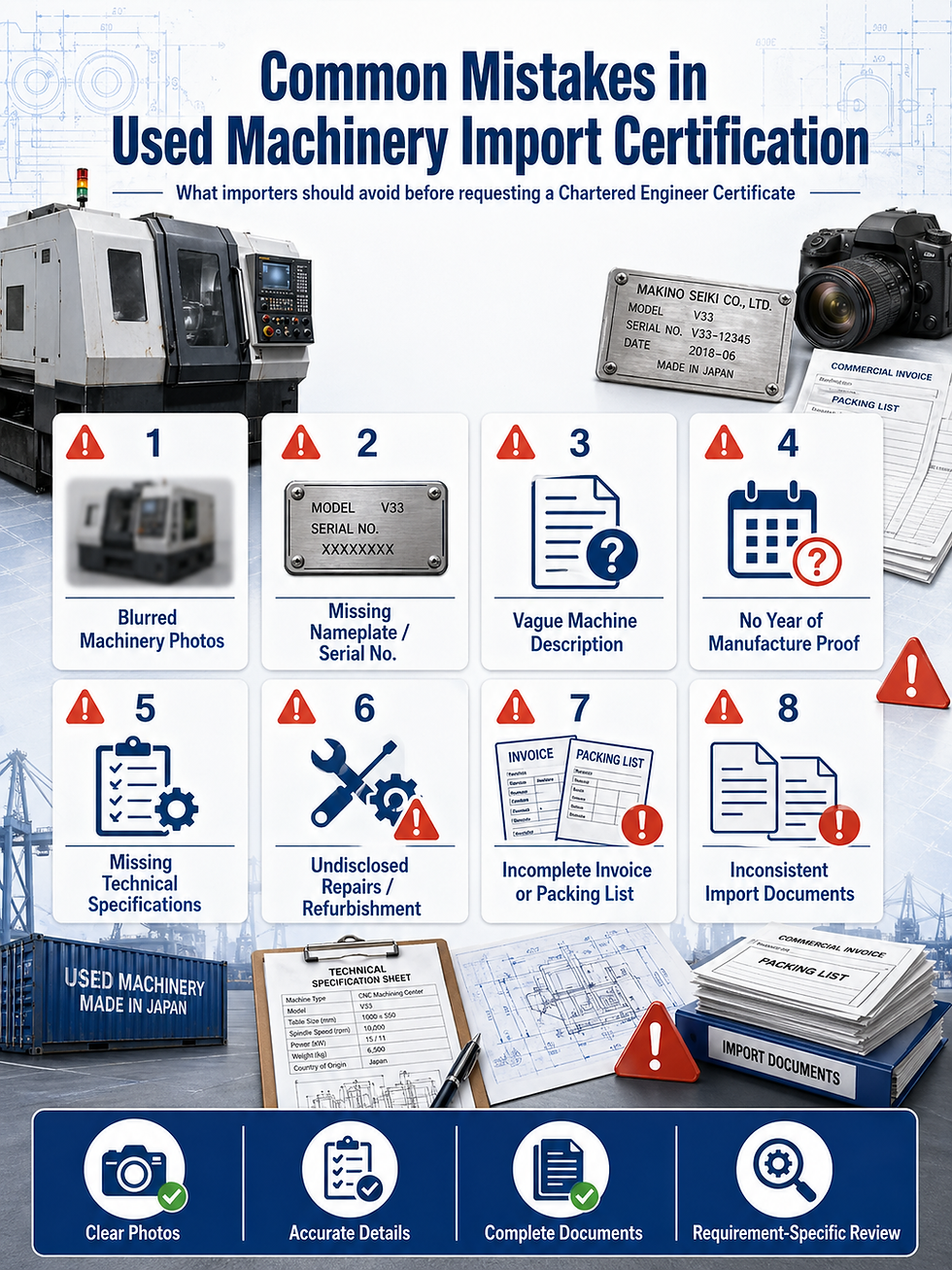
Common Mistakes Importers Should Avoid
1. Sending only invoice and photos
A Chartered Engineer certificate may need much more than an invoice and a few images. Technical specifications, year, serial number, condition, repairs and original value may all be relevant.
2. Using vague machine descriptions
Terms like “old machine” or “used equipment” are not enough. The description should identify what the machine does.
3. Not capturing nameplate photographs
The nameplate often contains make, model, serial number, year or rating. Missing nameplate photos can create unnecessary follow-up.
4. Not disclosing refurbishment
If refurbishment, reconditioning or repair was carried out before export, it should be clearly documented.
5. Confusing overseas CE certificate and local CE inspection
CBIC’s 2020 circular recognizes inspection/appraisement reports from Chartered Engineers or equivalent professionals in the country of sale, and also provides that where an importer does not produce such overseas report, they may engage an empaneled Chartered Engineer at the port of import.
6. Asking for a generic certificate
Used machinery import certification is requirement-specific. The certificate should match the actual machinery, documents and import purpose.
How SARK Engineers & Consultants Can Help
SARK Engineers & Consultants supports businesses with Chartered Engineer Certificate requirements for used and second-hand machinery import.
Our support may include:
requirement review
document checklist guidance
machinery detail review
technical certificate support
import documentation alignment
residual life and condition-oriented comments where required
certificate preparation based on available technical records
coordination support for requirement-specific documentation
For service details, visit: Chartered Engineer Certificate for Used Machinery
Need a Chartered Engineer Certificate for Used Machinery Import?
If you are importing used or second-hand machinery and need Chartered Engineer Certificate support, share your machinery details, invoice, photos, specifications and import purpose with SARK Engineers & Consultants.
We can help you understand the document requirement and prepare a structured technical certification file.
FAQs
What documents are required for Chartered Engineer Certificate for used machinery import?
Common documents include importer details, IEC, supplier details, commercial invoice, machinery description, make, model, serial number, year of manufacture, photographs, technical specifications, condition details, repair or refurbishment records, packing list and shipment documents.
Is a Chartered Engineer Certificate mandatory for second-hand machinery import?
Used or second-hand machinery import often requires technical certification or inspection/appraisement support. CBIC’s circulars recognise the role of Chartered Engineer reports for inspection/appraisement of second-hand machinery.
Should the certificate be issued overseas or in India?
CBIC’s 2020 circular states that imports of second-hand machinery should ordinarily be accompanied by an overseas Chartered Engineer or equivalent report prepared at the place of sale. If the importer fails to procure such a report, the goods may be inspected by a Chartered Engineer empanelled locally by the relevant Custom House.
Are machinery photographs required?
Yes. Close-up photographs of the machinery, including the nameplate or serial number plate, are important. CBIC’s prescribed forms also refer to attaching close-up photographs of machinery.
Is year of manufacture important?
Yes. Year of manufacture is one of the key technical details for used machinery import certification and is specifically included in CBIC’s prescribed report format.
What if the original invoice of the machine is not available?
If the original invoice is unavailable, the file should include the best available basis for estimated original sale price, comparable technical information or supplier/manufacturer documentation wherever possible.
Is residual life required for every machine?
Residual life or expected lifespan may be relevant depending on the requirement. CBIC’s format includes present condition and expected lifespan, and specifically refers to residual life certification for second-hand spares of capital goods in applicable cases.
Can SARK help before shipment?
Yes. It is better to review the document requirement before shipment wherever possible, especially for used machinery where photographs, nameplate details, original value, inspection location and refurbishment records may be easier to collect before dismantling and packing.

Comments